
• 1-800-880-6491

Financial Reporting

Communicating Performance with Accuracy, Clarity, and Confidence Through a Superior Financial Reporting Framework

The Challenge

Quarterly reporting is one of the most visible and scrutinized responsibilities of any public company. Investors, analysts, regulators, and media rely on these disclosures to evaluate performance, assess management credibility, and benchmark companies against their peers. Yet many companies face internal bottlenecks, inconsistent messaging, and compliance risks in preparing their financial communications—especially under tight timelines.

Without an efficient, well-structured financial reporting process, companies risk data inconsistencies, disclosure errors, and messaging misalignment that can damage market credibility and investor trust.

Our Solution

Streamlined, Market-Facing Financial Reporting That Builds Confidence

Our Financial Reporting services help public companies deliver accurate, investor-ready communications that reinforce transparency, support valuation, and meet evolving disclosure standards. We align financial reporting with strategic messaging to ensure your results speak clearly and consistently to capital markets audiences.

Our capabilities include:

  • Quarterly Reporting Support: We collaborate with your finance, legal, IR, and operational teams to craft management’s discussion and analysis (the “MD&A“), earnings call scripts, investor decks, and news releases that are cohesive, compliant, and compelling.
  • Narrative Alignment: We ensure your financial disclosures consistently link back to and reinforce strategic milestones, operational progress, and long-term guidance.
  • Earnings Call Preparation: We support scriptwriting, Q&A planning, and presentation development to equip executives with confidence and clarity.
  • Disclosure Best Practices: We benchmark your financial communications against industry standards and regulatory expectations to reduce risk and enhance readability.
  • Workiva Integration: We can help implement and operate Workiva’s financial reporting platform, enabling secure, cloud-based collaboration across functions for real-time updates, audit trail compliance, and efficient production of 10-Qs, 10-Ks, and other filings.

With MCI, financial reporting is more than a regulatory obligation, it becomes a tool to reinforce performance, build credibility, and shape investor perception.

Frequently Asked Questions

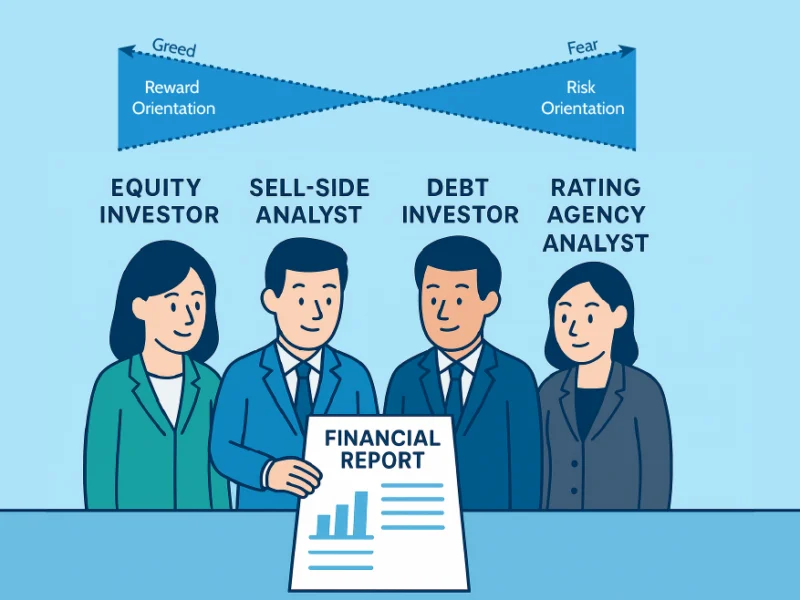
Financial reporting goes far beyond the financial statements. In fact, while the balance sheet, income statement, cash flow statement, statement of shareholder’s equity, and notes to the financial statements are essential to reporting, they form only a small part of the bigger reporting picture. Financial reporting encompasses all the communications and materials provided to debt and equity holders that provide the context surrounding the results reported in the financial statements. It includes management’s discussion and analysis, the results news release, the quarterly results presentation and webcast, scripted remarks, responses to questions during the webcast, and any supplementary data provided along with the results.

Both Canada and the United States are currently exploring semi-annual reporting, which would bring both countries in line with other jurisdictions around the world . Since President Trump’s call for a change from four reporting periods to two reporting periods in a fiscal year on September 15, 2025, Thomson Reuters has reported that the SEC is exploring a move to semi-annual reporting to make becoming a public company more attractive, less expensive, and less of an administrative burden. On October 23, 2025, the Canadian Securities Administrators (CSA) announced a proposed multi-year pilot to allow eligible venture issuers to voluntarily adopt semi-annual financial reporting. The pilot would provide an exemption for certain venture issuers listed on the TSX Venture Exchange Inc. (TSXV) or the CNSX Markets Inc. (CSE) from the requirement to file first and third quarter financial reports under National Instrument 51-102 Continuous Disclosure Obligations.

Most public companies across the world’s jurisdictions report under the International Financial Reporting Standards (“IFRS“) that are issued by the International Accounting Standards Board (“IASB“). While this facilitates comparisons between companies that report according to IFRS, complications arise when comparing companies that report in different standards such as US Generally Accepted Accounting Principles (“US GAAP“).  For example, the differences in how IFRS and US GAAP treat leases can distort the calculation of key valuation multiples such as EV:EBITDA.

Learn more about the capital markets

Access Our Insights